Welcome!
Enhancing Western Orchard Biological Control (EWOBC) is a collaborative SCRI project between Washington State University (lead institution), USDA-ARS, Oregon State University, and the University of California at Berkeley. The team is focused on ways to improve the stability of IPM programs in apple, pear, and walnut orchards, by enhancing biological control. Our team includes six entomologists, an insect geneticist, an economist, an extension specialist, and a sociologist.
Short Course
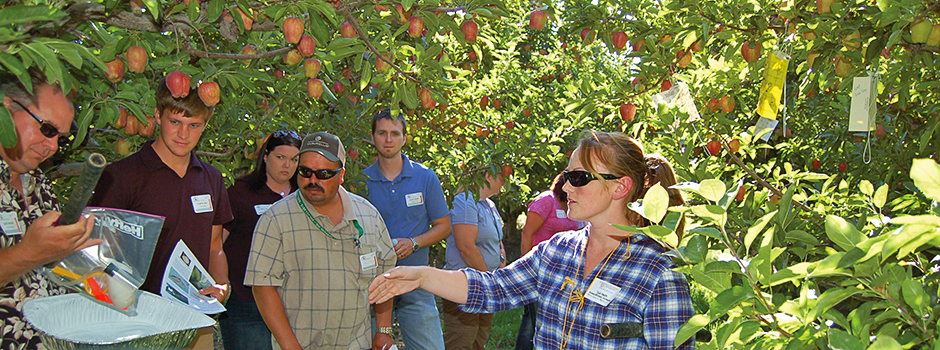
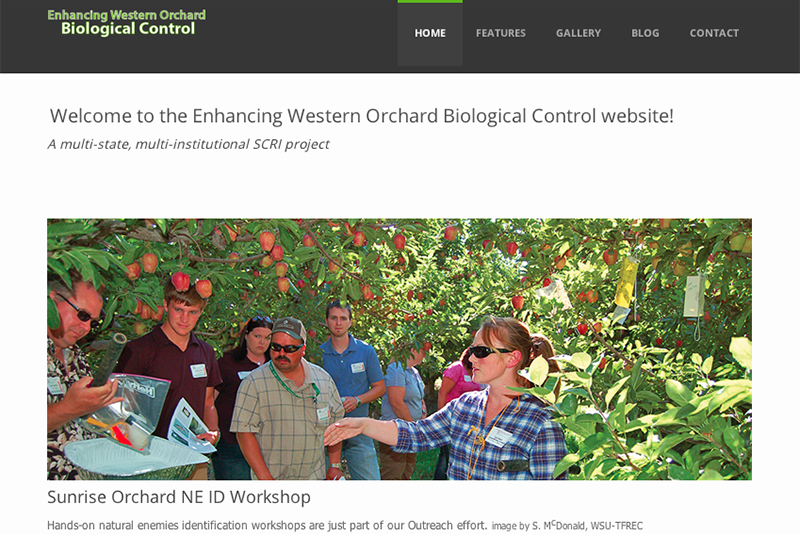
A new interactive short course about natural enemies and novel tools to maximize biological control will be offered in February 2012. Although focused on apple, pear and walnut orchard systems, the information presented in this 2-day short course is helpful and relevant to most perennial cropping systems. more info>>
The Washington/Oregon registration is now active. California's link is coming soon. more info>>
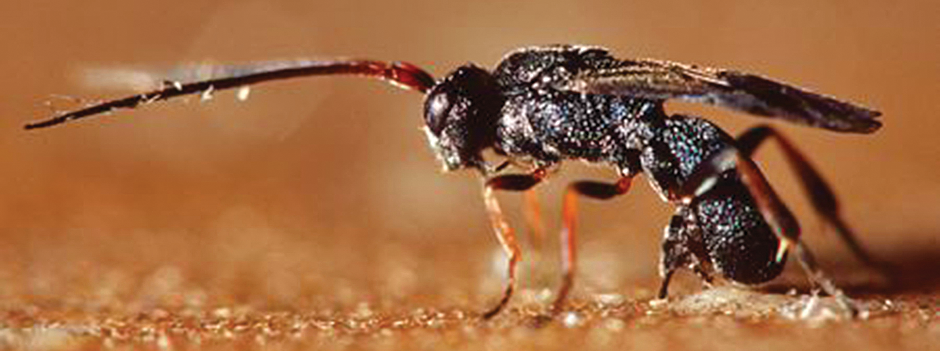
This small, but highly efficient parasitoid lays an egg inside a codling moth egg. Secondary hosts include OFM and LAW eggs.
This ectoparasitoid attacks leafroller larvae older than 3rd instar.
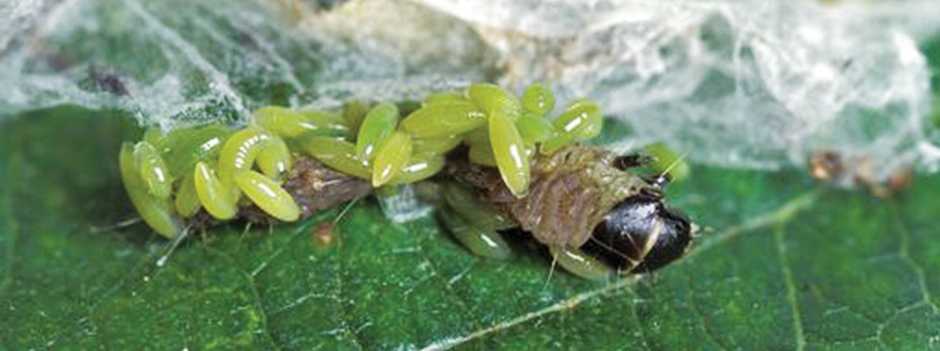
C. florus is a gregarious ectoparasitoid, meaning that several offspring develop on a single host larva, in this case a Pandemis leafroller.
This parasitoid attacks cocooned last instar codling moth larvae.
Tachinids are a large group of natural enemies with more than a 1000 species in North America and have a broader host range than parasitic wasps.
This tachinid fly is very adapt at locating host larvae in orchards.
1
2
3
4
5
6